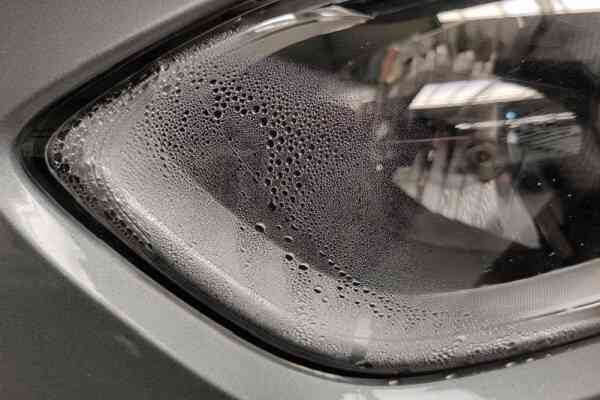


Guide to choice car tires, considering that all car tires come in the same shape, and are available in a wide range of sizes and types. The sheer number of options can make finding the right tires for your car seem daunting. With a little basic knowledge, however, you can easily choose tires auto suitable.
Determine possible tire sizes
All tires have a uniform sizing system that is expressed by a string of letters and numbers. For example, your car's tires might be "205 / 55 R15". The last three elements are what interests you in the first place.
– The first number 205, is how many millimeters wide the tire measures;
– The second number 55, is the aspect ratio, which expresses the tire's height as a percentage of its width;
– Final number 15, is the diameter of the rim on which the tire is mounted;
However, you don't need to know all this to choose the right size tires. Instead, you can simply find your car's tire size by finding tires that are the same size in all three measurements.
Some places where you can find the tire size printed
– On the side wall of each tire currently on the car;
– In the car's user manual;
– On the driver's door;
If you check the user manual, you may see the factory size shown with some alternate sizes that are also compatible. These alternate sizes will run well with car, but they will not fit the current rims unless you already have custom rims.
Alternative tire size
In most cases, drivers purchase tires of the same size as they currently have, so that they do not need to buy rims. However, there is, moreover, a logical aspect to change tire sizes and also to buy rims.
First of all, some drivers they buy bigger rims and tires because they like the style more. If appearance matters to you, this could be an upgrade that interests you. Second, some drivers who carry out activities in areas with snow, buy narrower tires, so that they can go through mud and snow more easily.
But assuming none of these apply to your situation, you can stay with the same size tires that are currently on car your.
Choose the right type of tire
Once you have determined the size of a tire, the next step is to choose the right type. There are many types of tires, such as winter tires, all seasons, summer and performance.
Many drivers drive with tires for all seasons, and these are the ones that come with most new cars. They offer a good balance between quietness, smoothness, fuel efficiency and traction. Other types, such as performance, summer and winter tires, all emphasize one aspect or another (for example, fuel efficiency combustible or traction) and are usually appropriate only in certain situations.
If you consider that you have no special needs, an all-season tire will probably give you solid performance. If you have a specific need, select the tire which is the most suitable for your situation. The names of such situations are generally descriptive of the purpose of a tire.
Brand new tires can affect with safety the budget, but they are always a necessity, both for maneuverability and for the safety of the car on the road. And in order to keep them in optimal conditions, discover ways for which you can obtain more duration of use.
Tire rotation
Since tires do not all wear at the same rate, regular rotation from where each tire is on car, ensures that they wear more evenly and will extend the life of the tires. A good habit to get used to is to rotate the tires at every oil change. There is already an article dedicated to this operation tire rotation.
Tire alignment
This service ensures that the tires/wheels are in the correct position with respect to the road between them and run optimally. When the tires on car are correctly aligned, their uneven wear will be minimized. Wheel alignment should be checked at least once a year, or after hitting a curb, going hard through a pothole, or other such issues.
Tire balancing
Ensuring that the weight is evenly distributed across the entire diameter of the tires helps you avoid uneven tread wear and excessive vibration, both of which can lead to the need for earlier tire replacement.
Visual inspection of tires
During most any routine work, the tires will also be examined to check for uneven or excessive wear, or foreign objects/cuts, in the tread or sidewall.
Considering the inclusion of the above services in the usual aspect of maintenance preventive maintenance of the car, will significantly help you to prevent tire repairs and will certainly extend the life of the tires on the car.
Attention to driving
This may seem obvious, but always pay attention when driving. If you notice things on the road that don't belong there, or a pothole on the road ahead, try to change lanes or access an alternative route to avoid them. Also, if possible, avoid driving on unpaved roads (unless you have off-road tires). This helps prevent the tire from wearing out faster and eliminates the chances of the tire being punctured by stones or other debris.
Also, try and avoid driving near construction areas as much as possible. The streets near construction sites are often full of nails, screws or other sharp objects, which could end up in the tire, causing unnecessary expenses.
Do not overload the tires
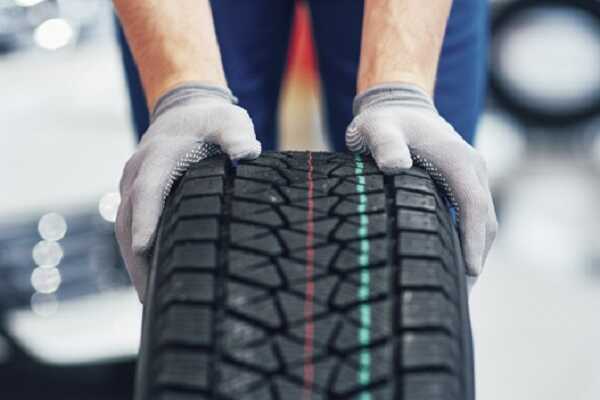
Take a look at the label on the inside panel of the driver's door, or on the fuel cap, to find out the maximum weight it should support car your. When you load car, it is recommended to avoid exceeding the maximum weight displayed. Overloading the car can end up destroying the tires. If you still have to carry a heavy load, slightly increase the tire pressure to help the vehicle support the weight.